Home»Blog
Nocturne
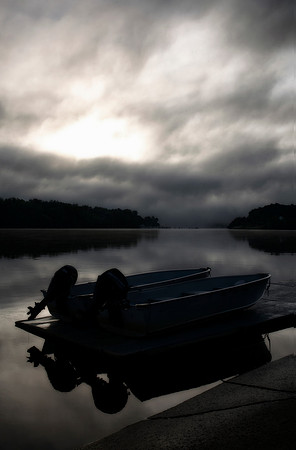
"Two Boats" by Eric Rennie My photograph entitled "Two Boats" is part of a juried competition called Nocturne at the Darkroom Gallery in Essex Junction, VT, near Burlington. Curated by photographer Lance Keimig, the exhibit runs from September 17, 2015 to October 11, 2015. Fifty-five images were accepted out of 630 submitted. Within Walking Distance
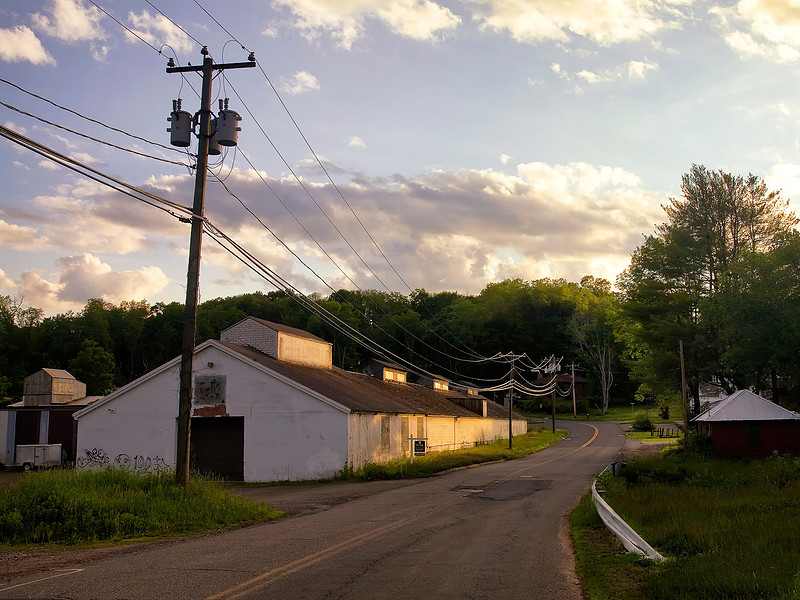
"Nooks Hill Factory Building" by Eric Rennie Some years ago I set myself the task of photographing whatever I could find within walking distance of my house in the small New England river town where I live. As it happens, I live within walking distance of farms, fields, factories, an old rail line, a tidal marsh, a state park overlooking the Connecticut River, a Catholic seminary whose grounds were designed by Frederick Law Olmstead's landscape architecture firm and a large nursery behind my house that grows trees and shrubs. I have photographed all of them at one time or another, although I confess I haven't always walked to my destination. Photo equipment is heavy, and my knees are a bit gimpy these days. The factory above has changed hands a number of times in recent years and is a bit of an eyesore. But even an eyesore can look beautiful in the right light. The image is on display from September 11, 2015 to October 16, 2015 at the 35th Annual Juried Fine Art Competition at the Gertrude Herbert Institute of Art in Savannah, GA. The show's theme is entitled "A Sense of Place."
Still
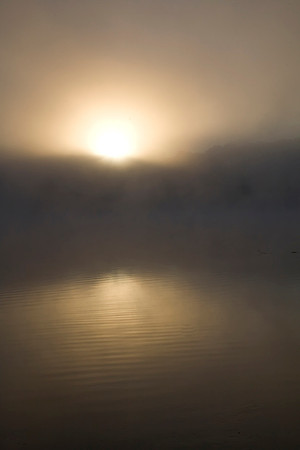
"Sunrise in Fog" by Eric Rennie Every photograph is still; hence, the name of the medium: still photography. But not every photograph conveys stillness, which is evoked from a place deep within oneself. So how does a photographer convey stillness in a still medium? “When you approach something to photograph it,” Minor White advised, “first be still with yourself until the object of your attention affirms your presence. Then don't leave until you have captured its essence.” Being still with yourself is the key; indeed, if you are not, you will never find stillness in your subject. As to how the object of your attention affirms your presence, I cannot say. That is a bit of a mystery. How does the Zen archer hit his target without aiming?
Not every subject lends itself to stillness, of course. When I am photographing my eight-year-old granddaughter, I am too busy trying to keep up with her to worry about finding stillness in myself. So what sorts of subjects best convey stillness? I did an image search recently using Google and discovered that a great many of the pictures linked to the word “stillness” were of water. I can’t say I am surprised. Water, when it is still, becomes a mirror to the world, just like the mind.
My photograph above, taken several years ago along the Connecticut River, is on display from August 14, 2015 through September 27, 2015 at the A Smith Gallery in Johnson City, Texas near Austin. The exhibition, entitled "Still," is curated by photographer Kate Breakey. Sixty images were selected for the show out of 768 submitted. True Color
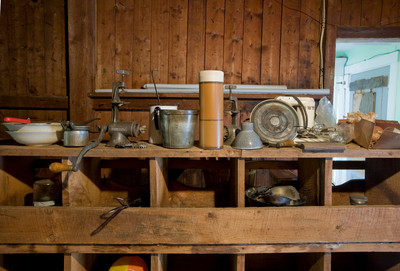
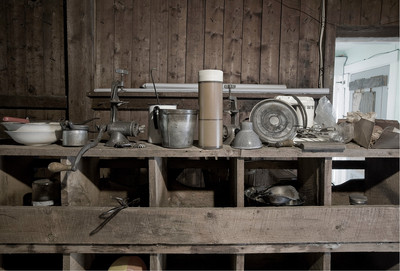
The image above as originally photographed; desaturated version below.
The George Eastman House in Rochester, NY is mounting an exhibition that commemorates the 100th anniversary this year of Technicolor film. That got me thinking about the use of color in photography – in particular, the issue of “true” color. (Technicolor itself is highly saturated, giving the world a luster that can be found nowhere else but in a Hollywood film.) The human eye does not perceive color the way it appears on screen or in a photograph. Different films and digital cameras operate within their own color ranges. The eye tends to adjust for color shifts caused by changes in lighting, so that a white object always appears white. However, a camera will pick up shifts in color balance caused by changes in natural or artificial light. For example, an outdoor scene may have a golden hue at sunrise or sunset that disappears at midday. Similarly, a white wall might appear yellow in incandescent light and blue in florescent light. So what, then, is the true color? Many masters of the black-and-white medium like Ansel Adams found color to be a distraction, although Adams did experiment with it. My digital photograph at top illustrates the problem. The green hallway at right, bright red-handled implement in the bowl at left, and yellow-and-orange object below all pull the eye in different directions away from the center of the photograph. I might have solved the problem altogether by eliminating color and working in black and white. Alternately, I could have reduced the color vibrancy of the image’s distracting elements, which retaining the rich saturation of the wooden shelves and walls. Instead, I chose to desaturate the color of the entire image to give it old-time look in keeping with many of the objects on display here. All Things Aquatic
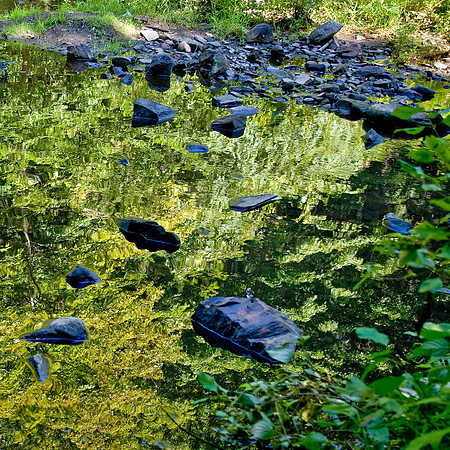
The photograph above above appears in an exhibit at the CORE New Art Space in Denver called The Water Show on "all things aquatic as seen through the eyes of more than thirty local and national artists." The image was taken near Wadsworth Falls in Middlefield, CT. The exhibit, which runs through July 26, 2015, is curated by Adam Finkelston and James Meara, owners and co-editors of The HAND magazine.
|
Archive
January
February
March
April
May
June
July
August
September
October
November
December
|