Home»Blog
Winter Air
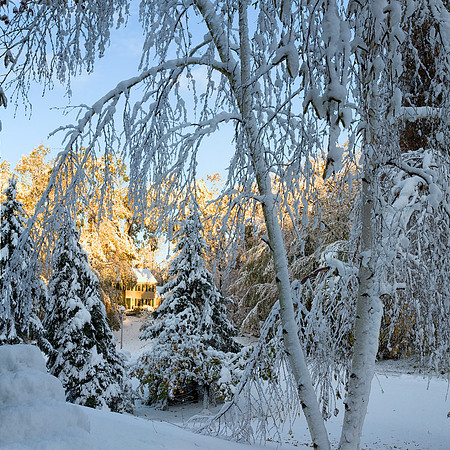
This photo is one of three I have appearing in a group exhibition entitled Winter Air at the View multi-arts center in Old Forge, NY. This apparently idyllic scene taken from the front steps of my house was shot the morning after an early snowstorm several years ago that knocked out power in my end of town for the better part of a week. My other two images in the show may be viewed here and here. The exhibition runs from January 18, 2014 through April 27, 2014. One by One
Five Elements
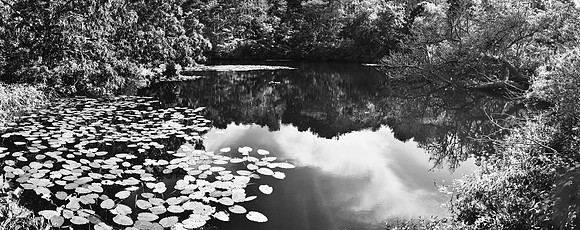
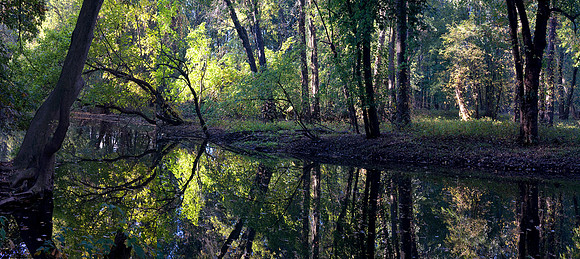
My photograph "Pond in Summer" was selected for a juried competition called "Five Elements" at the Darkroom Gallery in Essex Junction, VT. The exhibit runs from January 9, 2014 through February 2, 2014. The theme of the show is the natural world and its five basic elements: earth, water, fire, air, and space. The show's juror was nature photographer Eddie Soloway. Sun Stands Still
For thousands of years, people told time by the movement of the sun across the sky. Because the sun rose each day in the east and set in the west, they thought of time as circular rather than linear. It was the same with the seasons. The days would get shorter, then longer, then shorter again, completing a circuit. At the solstice twice each year, the sun would appear to set at the same point on the horizon for several days in a row, reversing its journey north or south; hence, the term solstice (sol+stice), from the Latin meaning “sun stands still.”
The solstice was often the occasion for pagan revels, even human sacrifices. In northern Europe, the winter solstice festival was known as Midvinterblot, meaning “midwinter blood.” As the name suggests, animal or human sacrifice was practiced as a way of appealing to the gods to bring back the waning sun. Elsewhere, sacrificial rituals were enacted at the winter solstice to represent the death and rebirth of pagan gods, including the Egyptian god Osiris and the Greek Dionysus. The Roman Saturnalia was a weeklong debauch, much like the Mardi Gras celebration in New Orleans or Rio de Janeiro, in which traditional master-slave roles were briefly reversed. A slave or criminal was crowned as mock king and got to live it up before he was killed at the end of the festival. The early church observed the birth of Jesus Christ around the vernal equinox in March. Then in the fourth century, Pope Julius I decreed that Christ's birth should be celebrated on December 25, which is when the winter solstice fell on the Roman calendar at the time. The date was chosen to supplant the pagan sun gods who were born or reborn on that day.
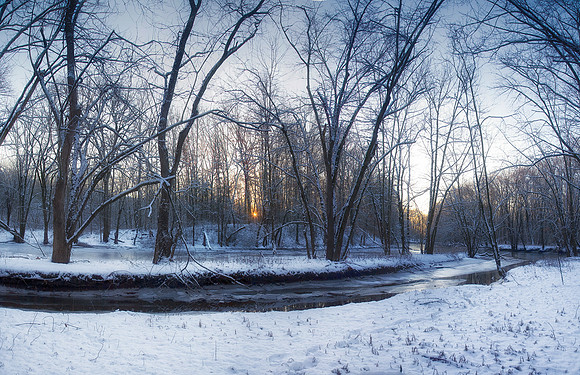
To mark the winter solstice, I have prepared a brief video slideshow of images taken at first light during the waning days of the year. Enjoy!
Study to Be Quiet
|
Archive
January
February
March
April
May
June
July
August
September
October
November
December
|