Home»Blog
Lace Curtain Window on the World
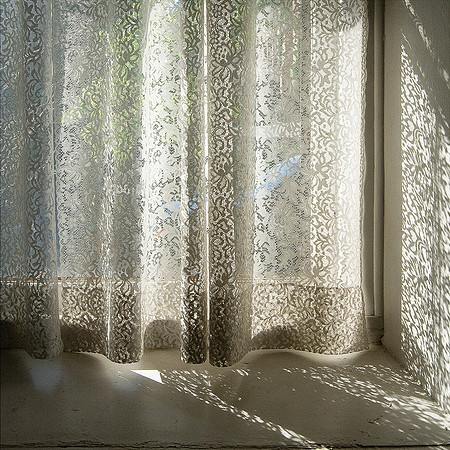
"Scrollwork 2" by Eric Rennie Light and shadow are the bread-and-butter of every fine arts photographer. I have found that lace-curtain windows are particularly fruitful in this regard. This particular specimen may be found in the Church of the Holy Trinity in Middletown, CT, which I attend regularly. I have photographed this window a number of times and have previously exhibited the results at least once before. This particular image has been accepted in a juried competition at the Midwest Center for Photography's tenth annual Ten X Ten small-works exhibition in Wichita, KS. All works in the show are 10" x 10" and sell for $100. The show runs from November 24, 2017 until December 31, 2017. Nature's Way
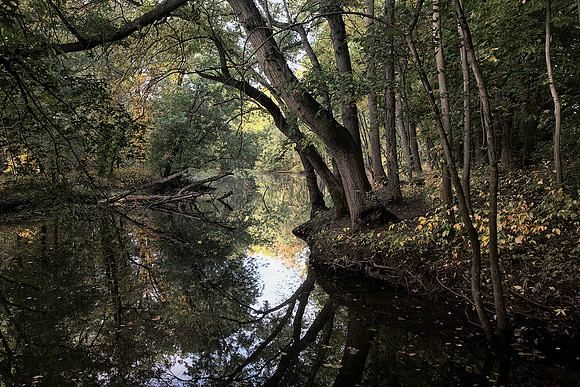
"Mattabesset River in Early Fall" by Eric Rennie This photograph has been accepted in a juried competition called "Nature's Way" at the Lightbox Photographic Gallery in Astoria, OR. The show runs from November 11, 2017 to December 5, 2017. The juror is photographer Jody Miller. The gallery is a new venue for me. I was attracted by the show's full titlle: "Nature's Way (a search for beauty) -- a signal that beautiful artwork was acceptable, which is not always the case in today's art world. I submitted five of my most gorgeous nature photographs, and this one was selected. Flower Power
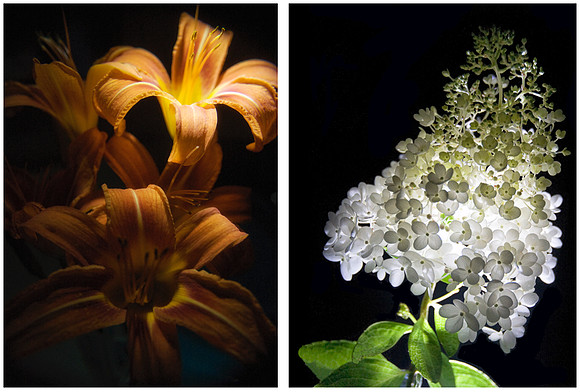
"Illuminated Tiger Lilly 2" and "Illuminated Hydrangea" by Eric Rennie Two of my images have been selected for a juried competition called "The Garden Variety” at the First Light Gallery in Louisville, KY. The show, which opened October 6, 2017, is part of the Louisville Photo Biennial and is a benefit for the Waterfront Botanical Gardens there. The two images, “Illuminated Hydrangea” and “Illuminated Tiger Lilly 2,” are part of a series taken this summer of flowers photographed close-up in a darkened room using a single beam of high-intensity light for illumination. Topographies
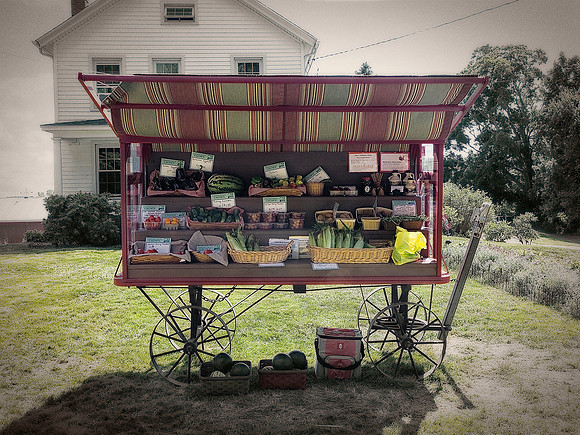
"Nooks Hill Road Farm Stand" by Eric Rennie This photograph is one of 25 images appearing in an exhibition called "Topographies" at the Midwest Center for Photography in Wichita, KS. The show runs from September 29, 2017 to October 13, 2017. Years ago I set myself the task of photographing whatever I could find within walking distance of my house in a small New England river town. As it happens, I live within walking distance of farms, fields, factories, an old rail line, a tidal marsh, a state park overlooking the Connecticut River, a Catholic seminary whose grounds were designed by Frederick Law Olmstead's landscape architectural firm and a large nursery behind my house that grows trees and shrubs. I have photographed all of them at one time or another, although I confess I haven't always walked to my destination. My photo equipment is bulky, and my knees are a bit gimpy these days. A Brief Look at Life
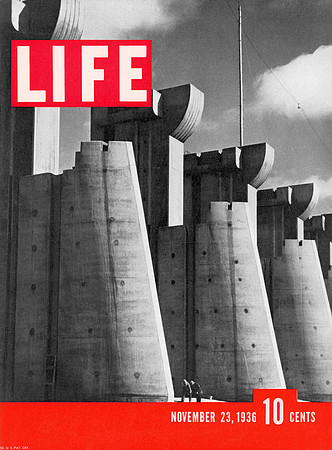
Debut Issue of LIfe Magazine If you are an aspiring writer, you look to your favorite authors for inspiration. But where do you go if you are a budding photographer? For photographers of a certain vintage, the answer is – or was -- Life Magazine. Pictured here is the cover of the debut issue, featuring a photograph of the Fort Peck Dam by the incomparable Margaret Bourke-White. Although it would be decades before I took up photography seriously myself, I was unwittingly absorbing valuable lessons from some of the world’s best photographers as I pored over the pages of Life Magazine each week. In 1936 publisher Henry Luce had bought out a struggling humor magazine called Life, stripped it of everything but its title and relaunched it as a weekly photo news magazine. The title of Life’s later rival, Look Magazine, perhaps better captured what Luce’s brainchild was all about. You were supposed to look at the pictures, and the text mainly served to explain what you were looking at. Toward this end, Luce hired some of the best photojournalists of the day, among them Margaret Bourke-White, Robert Capa, Henri Cartier-Bresson, Andreas Feininger, Dorothea Lange and Lee Miller. Life took advantage of two recent technological innovations to deliver high-quality photojournalism to its readers. The first was the recent availability of compact and durable 35-mm cameras like the Leica with shutter speeds of up to 1/500th of a second, which enabled photographers to go just about anywhere to get a story. The second was the use of heavily coated paper rather than newsprint, which guaranteed excellent photo reproduction quality in a mass-circulation publication. To show its pictures to best advantage, Life was printed in a large format – much larger than anything on newsstands today. The magazine initially sold for a dime. But even though it was an instant success, the magazine took three years to earn a profit due to high production costs. Life remained the nation’s preeminent photo journal until it ceased weekly publication in 1972, the victim of another visual medium -- television. |
Archive
January
February
March
April
May
June
July
August
September
October
November
December
|