Home»Blog
Ambient Light: A Natural Luminosity
A Sense of Place
Mind Games Forever
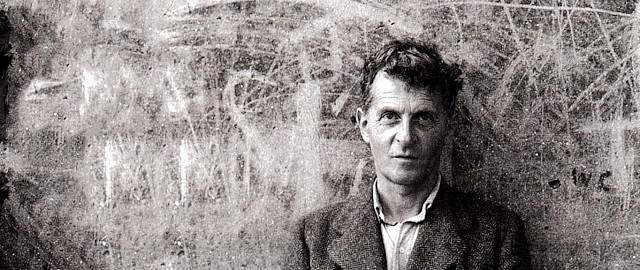
Ludwig Wittgenstein To commemorate the 60th anniversary of philosopher Ludwig Wittgenstein’s death, Cambridge University mounted an exhibition that explored links between his philosophy and his interest in photography. As a photographer, I was pleased to learn that one of the preeminent philosophers of the 20th century was an avid student of the medium. More to the point, Wittgenstein was that rarest of all creatures, a philosopher who thought in pictures rather than in words – and who believed there would be no need for philosophy at all if more of his colleagues would just learn to do the same. His famous mantra: Don’t think, look!
Granted, telling philosophers not to think is a bit like telling dogs not to bark. By this Wittgenstein meant they must carefully examine the language they used and to disentangle themselves from concepts that didn’t really point to anything in human experience. “Philosophy is a battle against the bewitchment of our intelligence by means of language,” he wrote in Philosophical Investigations, one of only two books he published in his lifetime. The role of the philosopher, he believed, was not to debate the truth of a proposition but to clarify it, which in most cases was to determine that it was nonsense. Such notions as truth or meaning were essentially ineffable and therefore not susceptible to logical analysis. Wittgenstein concluded his Tractatus by declaring, “Whereof one cannot speak, thereof one must be silent.” In this perhaps he betrayed a mystical sensibility – yet another ineffable quality whereof one cannot speak. He wrote, “The mystical is not how the world is, but that it is.”
There was a certain Zen-like quality to Wittgenstein’s pronouncements, which were closer to aphorisms than to reasoned philosophical arguments. One can easily imagine him as a Zen master beating his novices with a bamboo stick if they were so foolish as to give a rational answer when asked, “What is Buddha nature?” The resemblance between Zen and Wittgenstein’s method was not lost on the Christian contemplative Thomas Merton. “We quickly forget how to simply see things and substitute our words and our formulas for the things themselves, manipulating facts so that we see only what conveniently fits our prejudices,” wrote Merton in Zen and the Birds of Appetite. “Zen uses language against itself to blast out these preconceptions and to destroy the specious ‘reality’ in our minds so that we can see directly. Zen is saying, as Wittgenstein said, ‘Don’t think: Look!’"
Once you understand what Wittgenstein was trying to do, his love of photography seems only fitting. A photograph is not something you can explain; it is something you point to, the way a camera is pointed to capture the image in the first place. For this reason, I have found most writing about photography to be unsatisfactory, at least to the extent that it attempts to present a photograph’s meaning. As Wittgenstein himself expressed it: “A picture is a fact.” So then, either you see it or you don’t.
Newer Posts »
© Eric Rennie Photography
|
Archive
January
February
March
April
May
June
July
August
September
October
November
December
|