The Bell Tolls for Thee
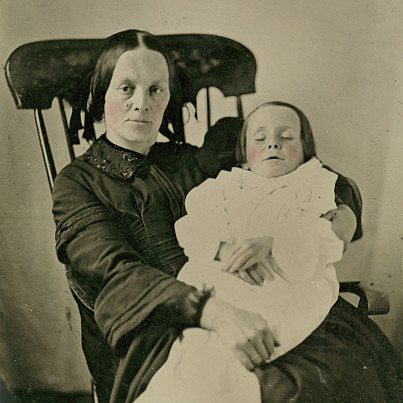
In the early decades of photography, exposure times were so long it was easier to take pictures of the dead rather than the living, since the subjects didn’t move. People sitting for a portrait were sometimes fitted with a neck brace to help them keep still, which is why they often looked like rigor mortis had set in, even when they were alive. As it happened, many were not. Until the late 19th century, post-mortem photographs were a popular way to memorialize the recently deceased, particularly infants and small children. Many commercial photographers specialized in them at a time when photography was expensive and family portraits of any kind were still rare. Photographers often went to great lengths to capture life-like poses of the dead: infants ostensibly asleep in their cribs, children cradled in their mothers’ arms, adults propped up in bed or even sitting in chairs. Memorial photographs were often hand-tinted to put a rosy bloom on pallid cheeks or were otherwise retouched so that eyes closed in death might look open. For obvious reasons, the dead often appeared more relaxed in photographs than their living counterparts. Modern sensibilities recoil from the seemingly morbid preoccupations of our Victorian ancestors. And yet it’s not at all clear that doing away with such graphic reminders of our own mortality is necessarily an improvement. In an influential essay entitled “The Pornography of Death,” British sociologist Geoffrey Gorer argued that we have merely replaced the Victorian squeamishness about sex with a modern-day taboo against death. Political considerations aside, the Bush Administration’s ban on photographs of flag-draped coffins coming out of Iraq is indicative. Contrast this with the corpse-strewn battlefields immortalized in Matthew Brady’s photographs of the Civil War, where a single battle could kill more soldiers in a day than all those lost in some of our recent wars. Death may be no less a fact of life than sex, but nowadays we’d prefer the evidence be kept well out of sight. |
Archive
January
February
March
April
May
June
July
August
September
October
November
December
|