Mirror World
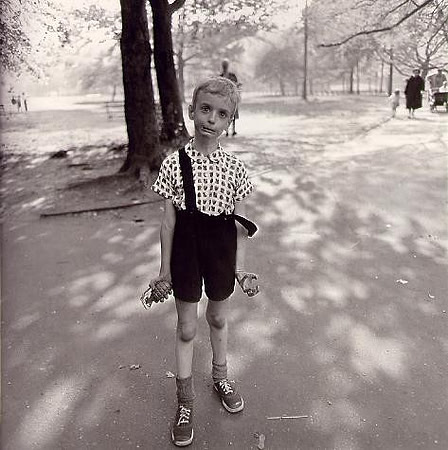
As a photographer, I have had occasion to reflect on the limits of objectivity. Of all the art forms, photography supposedly comes closest to presenting an objective view of its subject. After all, the camera is a mechanical device that captures whatever patterns of light and shadow happen to pass through its lens onto a strip of film or onto a digital sensor. Yet from its inception, photography has proven to be an ideal medium for presenting subjectivity as objectivity. Never mind the overt manipulations that take place in the darkroom or with the artful interventions of Photoshop. The mere act of taking a photograph alters reality by putting a frame around it. As Susan Sontag noted in her book On Photography, “There is no way to suppress the tendency inherent in all photographs to accord value on their subjects.” For the subjects, if they happen to be self-conscious beings, having their picture taken is almost always an out-of-body experience. A photographer points a camera at you, and you can’t help imagining yourself inside a picture frame. Your facial expression and body language adjust accordingly. I find this to be true even when I take a picture of myself, try as I might to look natural. How do I look natural without imagining myself as I might appear to others in the photograph? Inevitably, the subject of a photograph is the photographer, regardless of where he or she is pointing the camera. This can be seen readily in the work of Diane Arbus, who is most closely associated with photographs of circus freaks, nudists, transvestites and other exotic classes of humanity. It is not immediately clear why Arbus was drawn to the margins of society, since she came from a privileged background and did not appear at all freakish herself. Yet her pictures all had a certain strangeness about them, even if the ostensible subject matter was as ordinary as a child playing in a park. A case in point was a black-and-white photograph entitled “Child with Toy Hand Grenade in Central Park” (1962) above. A skinny boy of perhaps seven or eight wearing shorts and sneakers stands facing the camera, his arms held rigidly at his sides. He clutches a plastic hand grenade in one hand and the other is curled up like a bird’s claw. His head is tilted, and he is staring, with a strange grimace on his face. Seen in isolation, you might imagine that the subject of the photograph was demented or suffering from an advanced neurological disease. However, if you view the contact sheets from this photo session, you will see a perfectly ordinary child playing in the park. As a tireless photographer of a granddaughter about the same age, I can tell you it can be a challenge to take a picture when the subject is not making a face. The difference between Diane Arbus and me is that I edit out the images where my granddaughter is clowning for the camera. I am interested in presenting my granddaughter as she appears when she is not aware that I am taking a picture, whereas Arbus is after something different. The quality of strangeness captured in the fleeting image of the little boy grimacing for the camera is what makes the image a Diane Arbus. From there it is a small step to eliminate the indefinite article and say the image is Diane Arbus. |
Archive
January
February
March
April
May
June
July
August
September
October
November
December
|