Mind's Eye
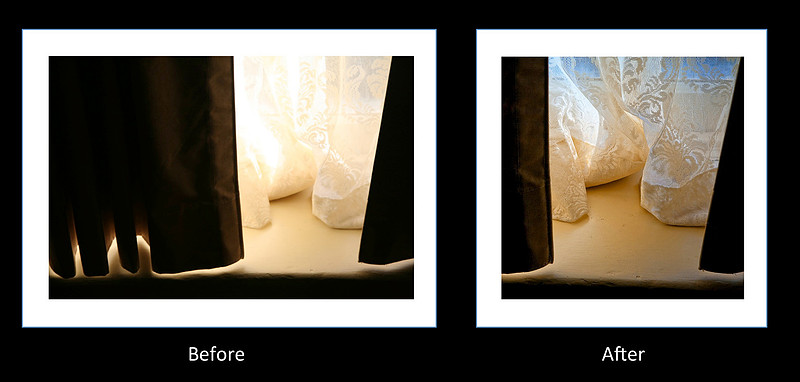
“You don't take a photograph, you make it,” Ansel Adams once wrote. Adams’ comment came at a time when serious practitioners still had to defend the legitimacy of photography as an artistic medium. They had to overcome the prejudice that photographers did little more than point their cameras at a nice piece of scenery and press the shutter. Even with Adams’ bulky large-format camera and glass-plate negatives, taking the picture was the easy part. He would then spend hours in the darkroom turning the raw image into a finished work of art. “The negative is the equivalent of the composer's score, and the print the performance,” Adams said. There are still those who think it is somehow cheating to manipulate an image after the picture is taken, which is easier than ever to do now that most photographers work with digital images on a computer rather than with film in a darkroom. People don’t realize that a camera doesn’t see the way the human eye does, and often the only way to make a photographic image look natural is to make adjustments after the image is captured. Adams, of course, was a consummate artist, and he was not content merely to present images as they might appear to the human eye. He used a technique he called “visualization” to try to imagine in his mind’s eye precisely how he wanted the finished photograph to appear even before he actually took the picture. He used this technique in an early black-and-white photograph of the massive granite edifice known as the Half Dome at Yosemite National Park. To heighten the dramatic contrast of sunlight and shadow on the 4,000-foot rock formation, he used a deep red filter to darken the sky. The sky looks almost black in the finished photograph, which you never see in broad daylight. And yet the image looks perfectly natural. Below I have displayed two versions of a photograph I took on my birthday several years ago in a hotel room in Annapolis, Maryland. On the left is the image as taken in late afternoon with a hand-held camera using available light. On the right is the same image after much careful adjustment on my computer using Photoshop and various add-ons. All the digital information presented in the finished photograph was present in the original image; however, I needed to do a bit of tweaking to bring it out. This is what Adams meant when he said you don’t take a photograph, you make it.
For a full-sized view of the final image, click here.
Keywords:
Ansel Adams,
visualization
|
Archive
January
February
March
April
May
June
July
August
September
October
November
December
|